


Most players lose Mirror Dungeon runs not because their team is weak, but because they fuse EGO Gifts without a plan. You end up with a pile of passive bonuses that don’t talk to each other, and by the time you hit the harder floors, nothing clicks.
This guide covers how EGO Gift Fusion actually works, the difference between random and recipe fusion, how to aim for specific Gifts instead of just hoping, and a few practical strategies to make your runs more consistent.
What EGO Gifts Are and Why Fusion Matters
EGO Gifts are passive modifiers you collect during Mirror Dungeon runs. Each one buffs your team in some way, usually tied to a status archetype like Bleed, Burn, Poise, or Rupture, and to sin keywords that match your team’s affinities.
Gifts come in tiers, from I through V, plus a rare EX tier. Higher tiers give stronger effects and contribute more points when used in fusion. You pick them up from abnormalities, events, shops, and fusion itself.
Without fusion, you’re stuck with whatever the dungeon drops. With it, you can convert weaker, off-theme Gifts into ones that actually fit your build. That’s the difference between a run where everything synergizes and one where you’re just hoping your raw damage carries you through.
How the Fusion System Actually Works
There are two types of fusion: random point-based fusion and recipe fusion. They work very differently, and knowing which one you’re using changes how you plan a run.
Random Fusion
In random fusion, you feed multiple Gifts into the system. The result tier is roughly the sum of the fused Gifts’ tiers divided by two, rounded down. So two Tier III Gifts give you a Tier III result, not a Tier IV. You need to combine higher-tier ingredients if you want a higher-tier output.
The result is drawn from the keyword pool you’re targeting. It’s not a guaranteed specific Gift — just one from that tier and keyword group. Using three Gifts that share the same keyword gives you roughly a 90% fusion success rate, so keyword alignment genuinely matters here.
Recipe Fusion
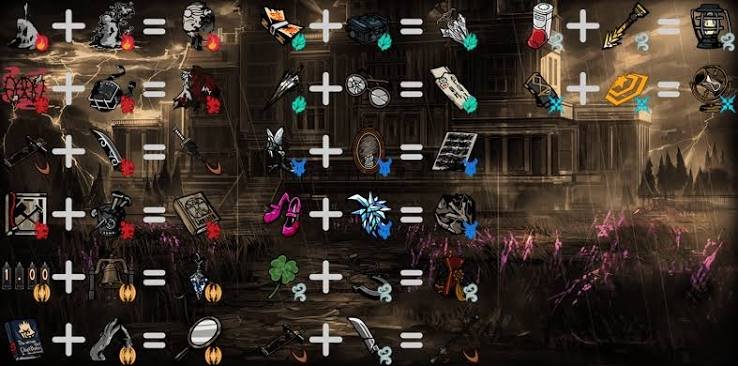
Recipe fusion is different. You combine a specific set of Gifts and always get the same named result. No randomness, no hoping. Recipe fusions are usually the goal for late-game builds because they guarantee powerful, defined Gifts that anchor an entire archetype.
The catch is that recipe fusions require exact ingredients, which often come from specific shops or events. You’ll need to plan ahead and know what you’re hunting before you start a run.
How to Target a Specific Gift Instead of Getting a Random One
Random fusion is, well, random — but there’s a reliable trick you can use when you’re chasing a specific Tier IV Gift. It depends on one condition: there are only two non-recipe Tier IV Gifts available for your chosen keyword.
Here’s how it works step by step:
- Fuse Gifts in your target keyword until you get a Tier IV result.
- If it’s not the one you want, use that Gift as fusion fodder in another Tier IV fusion.
- Because the system won’t produce the same Tier IV result twice in a row, the second fusion is forced to give you the other one.
For example, say you’re running a Burn build and there are two accessible non-recipe Tier IV Burn Gifts. You fuse until you get Gift A. You didn’t want Gift A, so you feed it back into another Burn fusion. The result has to be Gift B.
This only works reliably when exactly two non-recipe Tier IV options exist for that keyword pool. Check the pool before relying on it. It’s a practical trick, not a universal guarantee.
Recipe Fusions — Purloined Flame as a Case Study
Recipe fusions require three specific Gifts fused at a shop. When you have the right combination, the result is always the same named Gift. No probability, no variance.
Purloined Flame is a Burn-archetype recipe Gift and a good example of why these are worth chasing. At the start of each turn, enemies with Burn receive Offense Level Down. When a Burned enemy dies, your allies gain Damage Up on the next turn, scaled by Burn potency and the number of allies who inflict Burn.
That’s a strong compounding effect. It debuffs enemies, punishes kills, and rewards building around a single archetype. A Burn-focused party with Purloined Flame in play becomes noticeably more efficient over the course of a fight.
This is the pattern with most recipe Gifts. They’re not just stronger passives — they define the ceiling of what a build can do. If your keyword is Burn, Bleed, or Poise, there’s almost certainly a recipe Gift that ties the whole thing together. That Gift is what you should be working toward from the start of a run.
Practical Strategies for Better Fusion Runs
Pick One Keyword and Stick to It
The most common mistake is grabbing Gifts from multiple archetypes. A Bleed Gift and a Burn Gift might both look useful on their own, but they don’t stack, and you’ll end up spread thin. Pick one keyword that matches your team’s sin affinities and build around it the entire run.
Use Shops and Super Shops Intentionally
Standard shops let you fuse and buy Gifts. Super Shops are especially useful because they let you target keyword-specific fusions more directly. A common approach is to fuse four random Gifts at each Super Shop, targeting your chosen keyword pool, and buy cheap Tier I Gifts as fusion fodder when needed.
This keeps your inventory focused and makes sure each fusion is moving you toward something useful rather than filling your roster with random passives.
Use Wishmaking for Important Fusions Only
Wishmaking increases your fusion success rate or helps lock in better outcomes. It’s a limited resource, so don’t burn it on early low-stakes fusions. Save it for when you’re chasing a specific Tier IV or working toward a recipe fusion. Using it on every fusion wastes the benefit.
Sell Off Gifts That Don’t Fit Your Build
Hanging onto off-keyword Gifts is tempting because they feel like safety nets. They’re usually not. Selling misfit Gifts keeps your inventory clean and gives you resources to buy or fuse toward what you actually need. Treat your Gift roster like a focused toolkit, not a collection.
Farming Rare Gifts and Using Starlight Upgrades
If you’re trying to farm rare Gifts like A Certain Philosophy, the strategy changes a bit. The goal isn’t always to clear the dungeon — sometimes it’s just to unlock the Compendium entry.
One approach: upgrade your EGO Gift-related Graces (particularly the Star of Names and Spiders line) to boost gift-related effects. Rush the shop on Floor 1, fuse in groups of three with Wishmaking on, and once you’ve recorded the Gift in your Compendium, you can forfeit the run. The Compendium entry stays. This lets you farm rare Gifts across many short runs without needing to complete the full dungeon each time.
For general Gift quality improvement over time, two Starlight upgrades are worth prioritizing early. New Discovery adds more Gifts to your available pool. Fruits of Labor increases the spawn rate of Tier III and IV Gifts on later floors. Both make your fusion ingredients better and your overall runs more efficient.
If you want to dig deeper into resource planning across different types of games, Bizblinks has a range of practical guides worth checking out.
Hard Mode also unlocks access to top-tier Gifts, including Tier V options like Lunar Memory, which are rare and don’t appear reliably in normal runs. If you’re building toward a high-end late-game setup, Hard Mode is eventually where you’ll need to go.
A Simple Run Checklist
- Choose your keyword before the run starts — match it to your team’s sin affinity.
- Collect and fuse only Gifts tied to that keyword.
- Use three matching-keyword Gifts per fusion for the highest success rate.
- Know what recipe fusion you’re aiming for and track the ingredients actively.
- Use Wishmaking when chasing Tier IV targets or recipe ingredients.
- Sell off anything that doesn’t fit your archetype.
- Use Super Shops to bulk-fuse toward your keyword pool.
Final Thoughts
EGO Gift Fusion isn’t complicated once you understand the two systems. Random fusion is flexible but imprecise. Recipe fusion is predictable but requires planning. The players who get the most out of Mirror Dungeon are the ones who treat fusion as a build tool from the first floor, not something they do at the end with leftover Gifts.
Pick a keyword, know your target Gifts, and use shops and Wishmaking deliberately. That alone will make a noticeable difference in how your runs feel and how far they go.
Read Also: